Power Tool
Drill Press
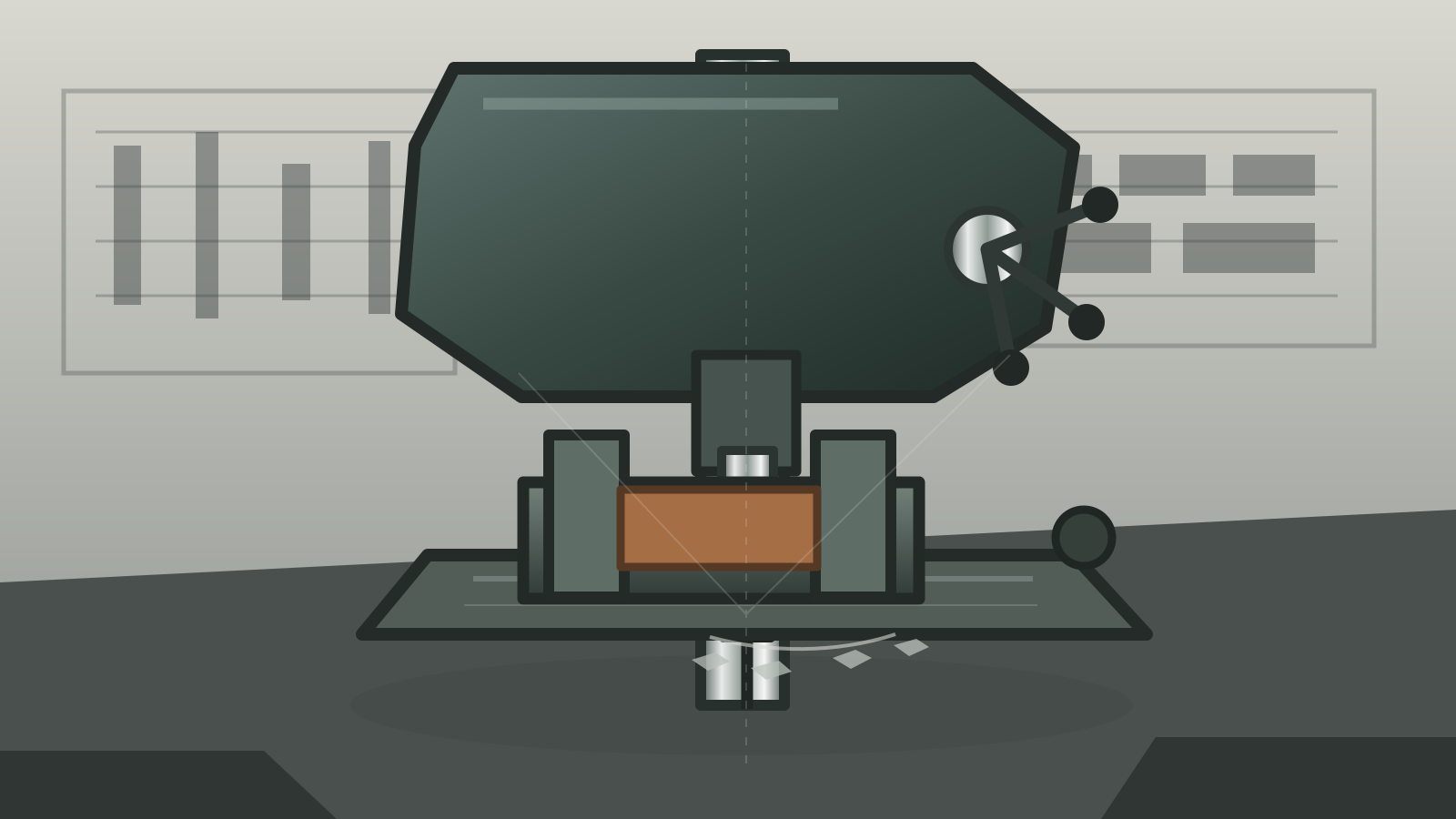
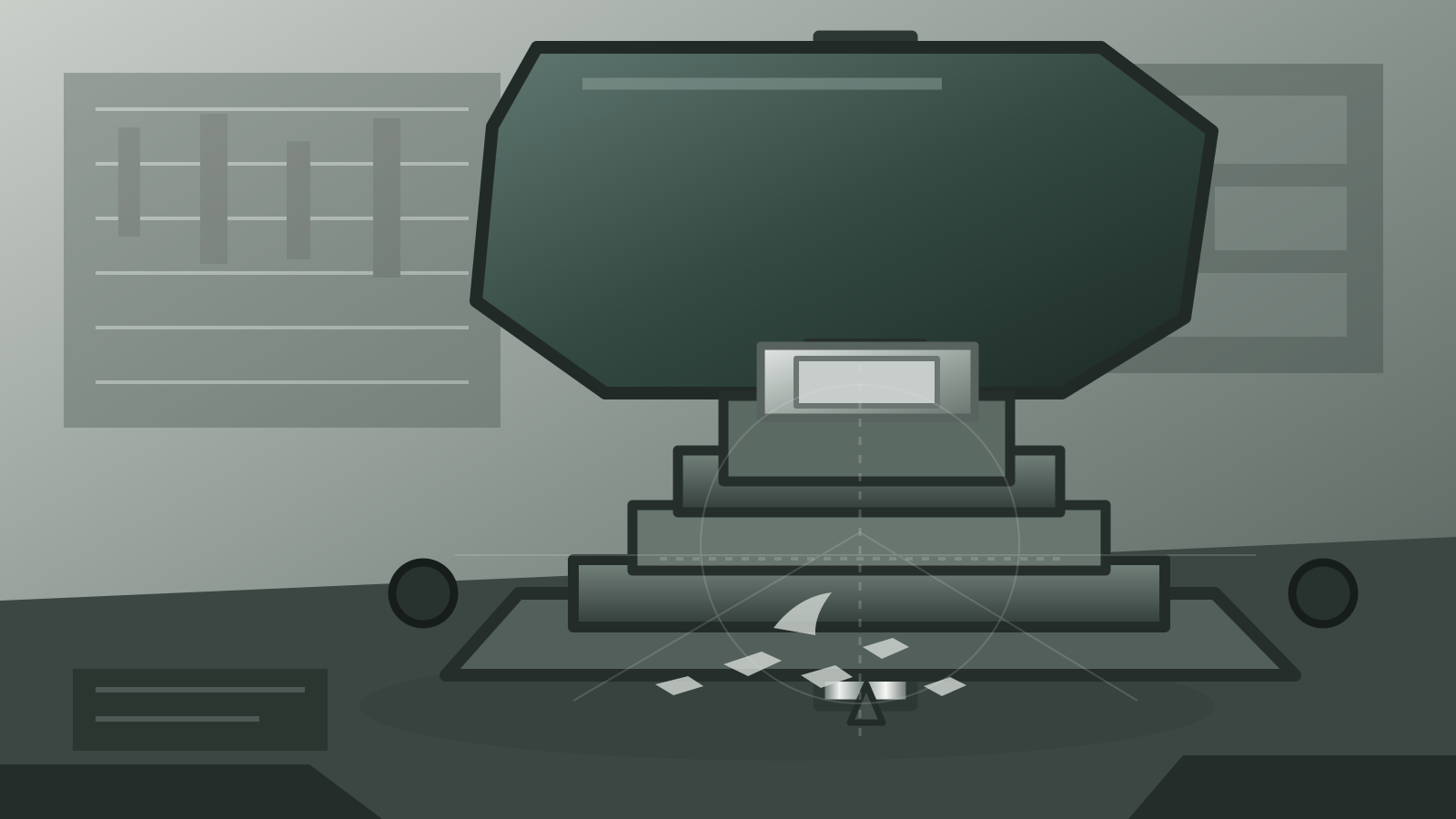
Drill presses are stationary drilling machines that guide a rotating spindle and chuck vertically toward a workpiece supported on an adjustable table.
Types · Capacity · Bits, Chuck and Speed · Setup · Workholding · Materials · Safety · Articles
Drill press types
Drill presses share the same basic vertical drilling layout, but machine size and mounting style affect capacity, workspace, and portability.
| Type | Typical role | Strengths | Tradeoffs |
|---|---|---|---|
| Benchtop | Home workshops and smaller workpieces | Compact and easier to place | Less vertical capacity than larger machines |
| Floor-standing | Larger workpieces and dedicated workshop use | More table-to-spindle space and a larger working envelope | Requires more floor space |
Capacity and specifications
Drill press capacity depends on swing, spindle travel, table clearance, and motor power, which together define the size and depth of work the machine can handle.
| Specification | What it describes | Why it matters |
|---|---|---|
| Swing | The nominal working diameter based on the distance from the spindle centerline to the column | Indicates how far toward the center of a wider workpiece the spindle can reach |
| Spindle or quill travel | Maximum vertical movement of the spindle during a drilling stroke | Limits the depth that can be drilled in one feed without repositioning |
| Table-to-chuck clearance | Available vertical space for the workpiece, vise, fixture, and bit | Affects the height of work that can be positioned beneath the spindle |
| Motor power | Power available to drive the spindle under load | Matters for demanding cuts, but does not by itself define swing, travel, chuck size, or workpiece clearance |
Bits, chuck and speed
Bit type, chuck capacity, cutting diameter, material, and spindle speed work together, so each should be matched to the machine and drilling operation.
| Bit or setup | Typical role | Practical consideration |
|---|---|---|
| Twist drill | General drilling in metal, wood, plastic, and other compatible materials | Choose bit material and geometry for the workpiece and reduce spindle speed as cutting diameter and load increase where the bit guidance calls for it |
| Brad-point bit | Accurate holes in wood | The center point helps locate the hole while the outer spurs help produce a cleaner entry |
| Forstner bit | Flat-bottomed and larger-diameter holes in wood | Larger diameters generally require lower spindle speed and firm workholding |
| Hole saw | Large-diameter holes in compatible wood, metal, plastic, and other rated materials | Match the saw to the material and use an arbor, spindle speed, and machine capacity appropriate for the diameter |
| Countersink | Chamfering or preparing a hole for a countersunk fastener | Use controlled speed and light feed to limit chatter and produce an even finish |
| Chuck capacity | Range of compatible straight-shank bit diameters | Match the bit shank to the chuck's stated range; chuck capacity is not the same as maximum hole diameter |
| Keyed or keyless chuck | Clamping compatible straight-shank bits and accessories | Seat the shank correctly, tighten it securely, and remove a chuck key before starting the machine |
| Spindle speed | Matching RPM to bit diameter and workpiece material | Use the machine's belt, pulley, or variable-speed adjustment to select a speed within the machine and bit manufacturers' guidance; larger cutting diameters commonly call for lower spindle speeds |
Setup and accuracy
Accurate drill press work depends on table position, squareness, depth control, and low runout so the bit follows the intended path consistently.
| Setup factor | What it affects | Practical check |
|---|---|---|
| Table height | Workpiece clearance and useful quill travel | Position the table so the work and fixture fit while leaving enough spindle travel for the hole |
| Table angle and squareness | Whether the drilled hole is perpendicular or intentionally angled to the work surface | Square the table to the spindle for perpendicular drilling or set and verify the required tilt for angled work |
| Depth stop | Repeatable drilling depth | Set and test the stop when multiple holes need the same depth or a through-hole must be controlled |
| Bit and chuck alignment | Runout, hole quality, and drilling accuracy | Confirm the bit is seated straight and investigate excessive visible runout before drilling precision work |
Vises and workholding
Drill press workpieces should be supported and restrained with a vise, clamps, stops, or shaped supports so the rotating bit cannot grab and spin them.
| Method | Typical use | Key consideration |
|---|---|---|
| Drill press vise | Small metal, wood, or plastic parts that fit securely between jaws | Clamp the vise or otherwise secure it to the table when the operation could rotate or shift it |
| Table clamps | Larger or irregular workpieces | Place clamps clear of the bit, chuck, feed handles, and intended drilling path |
| Fence and stop block | Repeat drilling at a consistent offset or position | Use a stable reference without trapping the workpiece in a way that creates a pinch or rotation hazard |
| Backing board | Supporting thin material and reducing breakout in through-holes | Secure the workpiece and backing together so neither can move as the bit exits |
| V-block or shaped support | Round stock and other work that can roll | Prevent the workpiece from rotating or shifting instead of relying on hand pressure |
Materials
Drill press setup should match the workpiece material, with bit type, spindle speed, feed pressure, workholding, lubricant, and backing selected for the job.
| Material or task | Typical bit or accessory | Useful guidance |
|---|---|---|
| Wood | Twist, brad-point, Forstner, spade, or wood-rated hole saw | Use backing where needed to reduce breakout and choose speed based on bit type and diameter |
| Steel and ferrous metal | Sharp metal-rated twist bit, step bit, or compatible hole saw | Secure the workpiece, use an appropriate spindle speed, and use suitable cutting fluid when the bit or material guidance calls for it |
| Aluminum and non-ferrous metal | Sharp metal-rated bit | Use controlled speed, clear chips, and use an appropriate lubricant when recommended for the bit and alloy |
| Plastic and acrylic | Sharp bit suitable for the specific plastic | Support the material and use controlled speed and feed to reduce melting, grabbing, breakout, or cracking |
| Thin sheet | Step bit or other sheet-compatible drill where appropriate | Support and clamp the sheet securely because thin material can catch and spin if left uncontrolled |
Drill press safety
Drill press safety depends on securing the workpiece, removing the chuck key, keeping loose items clear, controlling chips, and stopping the spindle before adjustments.
| Safety check | Why it matters | Practical check |
|---|---|---|
| Workpiece restraint | A bit can grab an unsecured part and rotate it violently | Use a vise, clamps, fixture, or other suitable workholding instead of relying on hand pressure |
| Chuck key | A key left in the chuck can be thrown when the spindle starts | Remove the key immediately after tightening or loosening the chuck and before switching the machine on |
| Hair, clothing, and jewelry | Loose items can become entangled in the spindle, chuck, or bit | Keep hair secured and loose clothing, gloves, jewelry, and other items away from rotating components |
| Chips and swarf | Sharp or hot chips can injure hands and eyes | Use appropriate eye protection and remove chips with a brush or suitable tool after the spindle has stopped rather than using bare hands near the bit |
| Adjustments | Moving the table, belt, workpiece, or guards around a rotating spindle creates unnecessary exposure | Stop the machine before changing speeds, repositioning the work, or making setup adjustments unless the manufacturer specifically provides a different procedure |
| Spindle stop | The chuck and bit can continue rotating after power is switched off | Wait for rotation to stop before measuring, clearing chips, changing work, or reaching near the spindle |